Skip to content

Turn sludge into value streams with pyrolysis
Transform municipal waste and biosolids into biochar – reducing pollutants, recirculating critical nutrients and storing carbon

Fully automated steam-drying and pyrolysis technology


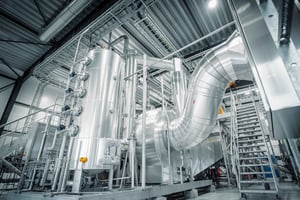
HECLA® Setores (short for Sewage to Resources) transforms sludge from a disposal cost into a resource. As the world’s first autothermal pyrolysis technology, it uses the energy in the sludge itself to sustain the process, minimising external energy demand and reducing operating costs.

Utilities, municipalities, and wastewater treatment plants use it to:

  • Reduce waste management costs
  • Upcycle municipal waste and wet biomass into biochar
  • Reduce environmental pollutants and greenhouse gas emissions
  • Turn disposal costs into revenue streams from carbon removal credits, biochar and thermal energy

Wastewater legislation is tightening. Disposal routes are shrinking. For utilities today, recycling vital nutrients and meeting carbon emission targets means navigating restricted land-spreading and skyrocketing PFAS fees.

Solutions like ours address these regulatory hurdles without compromising safety standards for operators, the community, and the environment.

Download HECLA® Setores product sheet


Solving the sludge crisis requires a modular solution that is innovative enough to make a difference, yet reliable enough to mitigate risks of a large-scale transition. Making a compact footprint is also essential when integrating into existing plants.

HECLA® Setores is a field-proven solution that transforms wastewater sludge into a recirculated resource, reducing pollutants and lowering emissions. Engineered for safe operations, it is fully automated and operates 24/7. While financial returns depend on site-specific factors, our technology is designed to support competitive payback periods and stable OPEX.

  HECLA® Setores 1.000
HECLA® Setores 1.500
Biosolid volume treated per year 850 tonnes (on dry matter basis) 1300 tonnes (on dry matter basis)

Unit dimensions (L x W x H)
excluding feeding and receiving systems

15 x 14 x 5 m 16 x 16 x 5.5 m
Total weight 45 tonnes 80 tonnes

Download HECLA® Setores product sheet

Water ripple
90%

reduction in sludge volume

Eliminates
99%

of PFAS, PAH, microplastics, and pharmaceutical residues

made by
AquaGreen-Logo_Web_White
Taarnby-site-3rd-ite-42
For every 1000 metric tonnes of dry matter treated:

• Store ~500 tonnes of carbon in biochar

• Produce ~2000 MWh of sustainable energy

• Reduce greenhouse gas emissions by ~1800 tonnes of CO2e
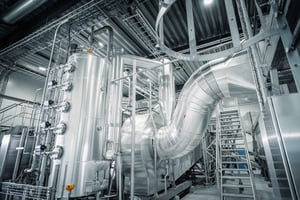
Aquagreen's
HECLA® Setores

Setores 1.000 and 1.500
Fully automated, continuous
steam-drying and pyrolysis

pwr-img_bento-icon
ROI between 4 and 11 years

Depending on site-specific factors 

Awards & Recognition
AquaGreen_SolarImpulse-label
The integrated process
Taarnby-site-3rd-ite-35
Steam dryer
Compact and cost-efficient drying
In the first part of the process, the machine dries the biomass in an oxygen-free atmosphere with superheated steam at 200°C. The process takes two hours and is free from malodour. The generated surplus steam is condensed, recovering the thermal energy for local or district heating. The design of the dryer is optimised for efficient wet biomass drying, achieving a minimal carbon footprint.
Pyrolysis
Next generation thermal treatment
Next, the dried biomass pyrolyses for 20 minutes at 650°C in an oxygen-free pyrolysis oven. This process eliminates 99% of harmful pollutants like microplastics, pharmaceuticals, pesticides, PFAS, and other organic compounds. The process releases pyrolysis gas, which is burned in an incinerator to generate thermal energy for drying and pyrolysis. The end product, biochar, contains phosphorus, natrium and inorganic carbon.
The end product
Taarnby-site-3rd-ite-39
Biochar
Stable and effective carbon sequestration
The result is a nutrient-rich, odour-free biochar with 5 to 6% plant-available phosphorous content. This can be used as a soil improver or upcycled into a substitute to activated carbon. What’s more, the carbon transformed through pyrolysis remains in the soil for centuries, providing an efficient way to remove atmospheric CO₂ and achieve long-term sequestration.
Potential application areas for biochar

Activated carbon substitute

Biochar removes similar amounts of pollutants as activated carbon, but through a significantly more sustainable and cost-effective process.

Agriculture

Biochar acts as a stable, porous material that improves soil structure, enhances water retention, and helps retain essential nutrients in the root zone.

Carbon Credit Market (CDR)

Biochar enables long-term carbon sequestration, so utilities may generate and sell Carbon Dioxide Removal Certificates (CDRs/CORCs). Market prices currently range around 100–150 €/tonne CO₂e.

Construction

Biochar can partially replace fossil-based carbon materials or supplementary cementitious materials in concrete and building products. This potentially improves material properties while reducing the carbon footprint of the sector.
How AquaGreen treats municipal sludge differently

Direct incineration
  Market alternative  

Sludge volume reduction:  ~90%

Environmental safety: Air emission concerns and carbon-heavy

ROI: Up to 30 years; often the lifetime of the plant

Byproduct: Landfilled bottom ash and hazardous fly ash

Revenue potential: None

Hydrothermal carbonization (HTC)
   Market alternative  

Sludge volume reduction:  ~75%

Environmental safety: Partial PFAS and pollutant removal

ROI: ~7 to 12 years; requires high gate fees

Byproduct: Hydrochar is toxic to plants

Revenue potential: Low; fewer carbon removal credits per tonne

Autothermal pyrolysis & steam-drying
   ✔️ AquaGreen  

Sludge volume reduction:  ~90%

Environmental safety: Reduces PFAS and other pollutants below detectable levels

ROI: ~4 to 11 years; driven by energy savings and byproduct sales

Byproduct: Carbon-sequestering, phosphorous-rich biochar

Revenue potential: High; carbon removal credits, biochar and thermal energy

HECLA® Setores in action

Our HECLA® Setores technology is live in plants across Denmark, Sweden and soon the United Kingdom. We are dedicated to understanding local regulations and permitting, and are bringing our proven, full-scale solution to new markets.


Adam RollinsonHead of Engineering Innovation at Thames Water

“Pyrolysis has the potential to reshape how we think about biosolids. By converting sludge into useful products, this technology could offer a more resilient and circular approach to wastewater treatment. It’s an important step in exploring how innovation might support the future of our sector.”

Lars Nørgård HolmegaardChief Executive Officer Lemvig Vand

The AquaGreen facility delivers significant environmental and economic benefits to Lemvig Water and the local community. As PFAS-contaminated sludge can no longer be applied to agricultural land, pyrolysis is the preferred solution.

James LitherlandInnovation Project Manager at Thames Water

We selected AquaGreen as a supplier for their unique pyrolysis package plant solution and their excellent level of technical engagement, which aligns strongly with our ambition to transform sludge management through sustainable, compliant and data-driven approaches.

Per Henrik NielsenProject DirectorVandcenter Syd A/S

AquaGreen’s technology will provide the exact solution that the wastewater industry has been asking for during the last many years.

Peter WinterPrincipal Engineer at Thames Water

AquaGreen’s technology offers a robust platform for real-world trials, giving us confidence in its ability to prove the concept of sewage sludge pyrolysis and deliver meaningful insights and long-term value for the sector and for our customers.

Fanny VilladsenChief Executive OfficerOdsherred Forsyning

I want to protect our common groundwater, our environment and ensure a better future for our descendants. That is why we have chosen to invest in AquaGreen’s technology.

Peter VangsboExecutive DirectorInnovation Centre Denmark Seoul

I see huge potential in AquaGreen and their sustainable sludge drying technology. No doubt that the timing is right for this type of technology within a number of industries.

Frequently Asked Questions


Does pyrolysis reduce greenhouse gas emissions?

Yes. Pyrolysis reduces emissions by primarily avoiding methane (CH₄) and nitrous oxide (N₂O) from sludge storage and land application. It also sequestrates carbon in biochar, lowering overall climate impact.

Sequestrated carbon in biochar persists for centuries to millennia. Furthermore, lifecycle assessments indicate reductions of ~1,000–1,500 kg CO₂e per tonne of dried sludge compared with conventional storage and direct land application.

Does pyrolysis remove PFAS from sewage sludge?

Yes. Pyrolysis has been shown to reduce PFAS in sewage sludge to below detectable levels when combined with thermal oxidation of process gases,highly effective destruction of PFAS compounds.

Full-scale studies demonstrate non-detectable PFAS levels in biochar and flue gas following pyrolysis at ~600°C with subsequent thermal oxidation above ~850°C.

What emissions are generated in the HECLA® Setores process?

The HECLA® Setores process includes thermal oxidation, where gases are combusted at high temperatures (~900–1000°C), followed by wet scrubbing for removal of acidic gases, particles and residual contaminants. Third-party measurements from AquaGreen’s HECLA® Setores, under stable operation, show emissions well below typical regulatory limits for key parameters such as CO, SO₂ and particles.

Exact emission levels depend on feedstock composition and plant operation.

How energy efficient is HECLA® Setores? When HECLA® Setores reaches its nominal operating temperature, the pyrolysis of sludge generates gas that is combusted to produce heat. Depending on the sludge composition, this recovered energy is reused within the process, enabling autothermal (energy self-sustained) operation. Excess steam generated during drying is condensed and can be recovered for external uses, such as district heating.
Is pyrolysis better than incineration for sludge treatment? Incineration converts sludge carbon to CO₂ and produces ash, while pyrolysis preserves carbon in biochar and retains nutrients like phosphorus. Operating energy self-sufficiently, pyrolysis supports carbon storage and circular resource recovery.
What happens to microplastics and pharmaceuticals during pyrolysis?

At high temperatures, microplastics and organic micropollutants such as pharmaceuticals are thermally degraded or eliminated from the solid phase. This significantly reduces environmental contamination risks.

Microplastics degrade at ~450–500°C, while pharmaceuticals are reduced to below detection limits above ~500–600°C.

Is biochar from sewage sludge safe to use in agriculture?

It can be, when produced under controlled high-temperature conditions and used within regulatory limits. Pyrolysis eliminates pathogens, viruses and organic pollutants.

To be used in agriculture, it depends on national regulations, biochar quality, and contaminant testing and compliance with heavy metal limits. During sludge pyrolysis, 80–100% of phosphorus is retained, and operation in the range of ~600–700°C (typically around 650°C) ensures effective contaminant removal while preserving phosphorus availability. Heavy metals are not destroyed but become immobilised in the biochar matrix, significantly reducing their mobility compared to untreated sludge and supporting safe use within regulatory limits.

What is the typical ROI for a HECLA® Setores?

Typical return on investment (ROI) with HECLA® Setores is 4–11 years, depending on sludge composition, disposal costs, energy prices and site-specific factors such as utilisation, regulatory conditions and available incentives.

Aside from faster ROI, utilities switch to integrated steam-drying and pyrolysis technology to reduce disposal costs, increase energy recovery and potentially receive revenue from carbon removal credit.

Is pyrolysis just moving pollution from soil to air?

No. Organic pollutants are thermally degraded during pyrolysis, while heavy metals remain in the biochar and are stabilised rather than released. Process gases are oxidised and treated before discharge.

Mass balance studies show destruction of organic contaminants and reduced mobility of heavy metals compared to untreated sludge. Full-scale measurements show non-detectable PFAS in flue gas before and after scrubber treatment.

What are the characteristics of AquaGreen biochar?

AquaGreen biochar is a stable, carbon-rich material with high phosphorus retention and low contaminant levels. It is produced under controlled conditions that ensure effective removal of organic pollutants, reduced heavy metal mobility and long-term carbon sequestration, making it suitable for safe and sustainable use.

Scientific studies show that at ≥600°C:

  • Organic micropollutants are effectively eliminated, including pharmaceuticals, PAHs and PCBs
  • PFAS concentrations are reduced to below detection limits
  • Microplastics are eliminated from the solid fraction at temperatures above ~450–500°C
  • Heavy metals are chemically stabilised, resulting in reduced mobility compared to untreated sludge

HECLA® Setores operates at 650°C with a residence time of ~20 minutes, exceeding degradation thresholds for plastics and organic contaminants, while ensuring product quality and compliance with regulatory requirements.

Get in touch

To discuss a proven, automated solution for your plant, contact our team today. Want to know the potential return on HECLA® Setores? Fill out our ROI form instead, and we will get back to you with a business case.