
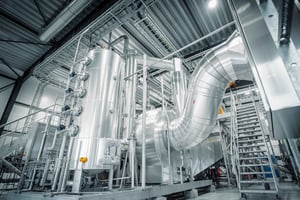
At Harboøre Wastewater Treatment Plant, Lemvig Vand has installed a steam-drying and pyrolysis plant from AquaGreen. The plant is now operating reliably, reducing emissions, destroying PFAS and producing biochar. The technology has proven itself—but the future use of the residual product still depends on clearer regulation.
“The plant has operated with very few interruptions over the past year, and the technology has proven itself.”
That is Stefan Peter Hald Nielsen, Team and Project Manager at Lemvig Vand, describing the steam-drying and pyrolysis plant AquaGreen delivered to Harboøre Wastewater Treatment Plant.
The plant was installed to help Lemvig Vand meet its climate targets and find a more sustainable solution for sludge management. Based on the approximately 4,000 tonnes of sludge produced annually at Harboøre and Lemvig wastewater treatment plants, the utility expects to reduce emissions by around 1,200 tonnes of CO₂ equivalents per year.
Through pyrolysis, carbon is stored in the resulting biochar. At the same time, gases from the organic sludge are used to power the process instead of being released as harmful methane.
The plant also addresses several challenges associated with sludge containing PFAS-4 and PFAS-22. Instead of transporting sludge exceeding the limit values to incineration, the contaminants are destroyed through the process, along with substances such as PAHs, oil residues and pharmaceutical residues.
A resource waiting for regulation
For Lemvig Vand, the main unresolved issue is not the technology itself, but what can be done with the biochar.
The Danish Executive Order on the Use of Waste for Agricultural Purposes does not currently recognise biochar from wastewater treatment plants as a soil-improvement product. This means that the biochar cannot yet be applied to agricultural land, even though it complies with the requirements of Lemvig Vand’s environmental permit.
“I need arguments and guidance. The authorities are investing billions of kroner in the development of pyrolysis, but what about the residual product? They need to provide clarity about how it can be used.”
Stefan Nielsen points to several potential benefits. Biochar contains approximately 8–13% phosphorus and can retain three times as much water as ordinary agricultural soil. In a municipality where groundwater levels are already a major challenge, its water-retaining properties could be valuable.
At present, however, the biochar is being mixed into concrete, which Stefan Nielsen considers a waste of an important phosphorus resource.
“If our biochar complies with the limit values, why are we not allowed to use it? As long as there are no clear regulations, we are missing out on the benefits of both the product and the technology.”
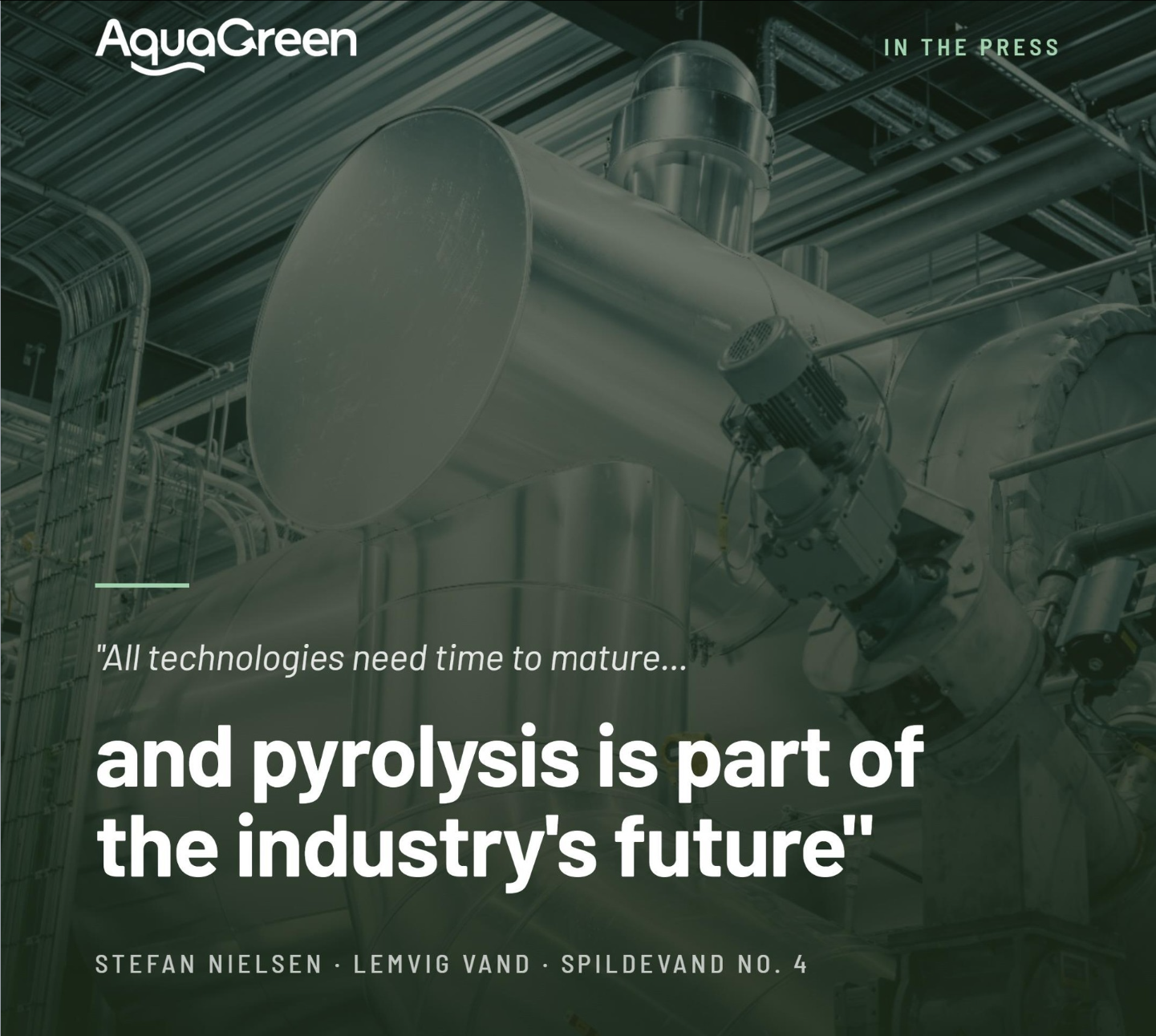
Reliable operation - and the need for patience
Although the plant has required adjustments, Stefan Nielsen emphasises that it has operated with very few interruptions over the past year. AquaGreen is currently implementing a number of improvements based on Lemvig Vand’s experience with its specific sludge.
“It is important to understand that the plant operates differently with different types of sludge. The technology also needs time. It needs to mature and develop.”
He believes the industry must allow new technologies time to develop, particularly when they are being introduced under strict regulatory and operational requirements.
“New technologies require patience, but because every utility is under pressure from strict requirements, there is very little patience in the industry.”
Potential applications for biochar
Lemvig Vand is also considering whether biochar could be used as a partial replacement for activated carbon in fourth-stage treatment. Although biochar is not identical to activated carbon, it can adsorb heavy metals and could potentially be produced locally instead of relying on activated carbon manufactured in China.
Such an application would mean that the phosphorus in the biochar would no longer be available as a fertiliser resource. Klimatorium is therefore investigating whether phosphorus can be extracted before the biochar is used as an adsorbent.
For Stefan Nielsen, the plant demonstrates that steam drying and pyrolysis can solve several of the utility’s challenges at once: reducing emissions, destroying PFAS, storing carbon and creating a potentially valuable residual product.
The next step is a clear regulatory framework that allows the biochar to be used as the resource it has the potential to become.
Full article in Danish in Spildevand no. 4, text by Anna Klitgaard and photos by Lemvig Vand: e-magasin.stf.dk


More news
Thames Water and AquaGreen are pleased to announce that AquaGreen has been appointed as the technology provider for an Ofwat-funded project to deliver the UK’s first continuously operating.
Read More
From international delegations in Denmark to commissioning our first full-scale commercial plant in Sweden, AquaGreen continues to demonstrate how innovative wastewater solutions can accelerate the green transition across Europe.
Read More
Odsherred Municipality has approved the expansion of Odsherred Forsyning with a combined sludge drying and pyrolysis plant — the world’s first facility of its kind.
Read More
Engineered for long-term carbon sequestration
HECLA® Setores (Sewage to Resources) transforms biosolids management by turning wastewater sludge into a valuable carbon-rich resource. The integrated steam-drying and pyrolysis solution enables wastewater treatment plants to produce high-value biochar while permanently sequestering carbon.
Est 2014